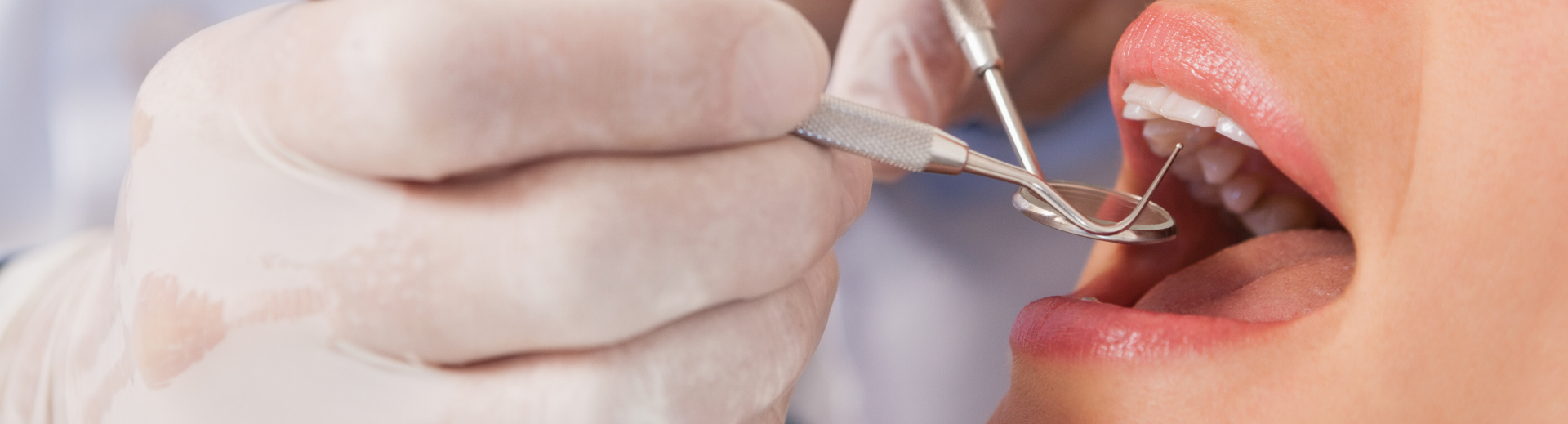
Dental hygiene treatments help to keep your teeth and gums clean, which helps to reduce the build-up of plaque and bacteria and keep infections and tooth decay at bay. Much like dental check-ups, it’s important to have semi-regular dental hygiene visits to maintain great oral health, and keep your breath nice and fresh.
A dental hygiene treatment at Hilton Dental usually includes a deep clean and scale of your teeth and gums to remove any trapped food and plaque, check for early signs of decay, and a thorough polish to make sure you leave with squeaky clean teeth and fresh breath.
We’ve all been told at some stage that flossing is important for healthy teeth and gums, and here’s why.
Debris from the food we consume naturally accumulates between the teeth and, if not regularly removed, bacteria will develop and plaque will form. It’s important that we floss on a daily basis (or as often as you can) in order to remove the food and prevent the buildup of plaque. The best way to floss is to use a back and forth and vertical motion between the teeth and until all the plaque is removed, making sure to be gentle with the gum line.
Flossing underneath orthodontic braces or bridges can be a little difficult, so we recommend using Superfloss, which has a stiff end that can be poked through the gaps in the teeth to get below any wires.
You can use the stiff end of the Superfloss to insert between the teeth, pull it through, and then sweep under the wire or attachment to reach the places you can’t access with regular floss.
Over the course of a day, food and debris get lodged in between your teeth, and in any gaps you may have. If left, this debris can cause dental decay and gum disease.
Removing food debris and plaque with an interdental brush will help keep your breath fresh. Cleaning in between your teeth makes sure that you are cleaning your mouth as thoroughly as possible.
Brushing your teeth is a crucial part of keeping your teeth and gums free of plaque, but normal toothbrushes often struggle to reach the spaces between the gums. This is where dental hygiene appointments come in, but there are also some at-home solutions you can use in between your hygiene visits to keep your teeth and gums clean. Your dentist will be able to guide you in the right direction according to your specific oral health needs.
Having bad breath is a very common problem, and there are lots of different causes.
Persistent bad breath is usually caused by the unpleasant sulphur gases which are released by the bacteria that coat your teeth and gums, and especially the back of your tongue. However, with regular brushing, flossing, and dental hygiene visits, you can keep the plaque at bay and keep your teeth and gums clean to encourage fresh breath.
Common causes of bad breath

You will know that there are certain places in your mouth that are difficult to reach with your normal brush, and there are also some gaps between your teeth that your toothbrush will not be able to access.
Over the course of a day, food and debris get lodged in between your teeth, and in any gaps you may have. If left, this debris can cause dental decay and gum disease. Removing food debris and plaque will help keep your breath fresh, and cleaning in between your teeth makes sure that you are cleaning your mouth as thoroughly as possible.
No. These small brushes should be used as an additional part of your normal oral hygiene routine to be effective.
Includes a comprehensive dental exam, X-rays, and a routine hygiene clean performed by the dentist. A great way to get started on your journey to a healthier smile.
Book now

Complete the form and a member of our team will be in contact.
I have just finished a 6 month treatment plan which included having 2 crowns and posts removed from my front, top teeth area, then waiting 3 months for this to fully heal, before having a single impla… Read More
Everyone at Hilton dental practice is exceptional! The level of service is far superior to any dentist and now I would never go anywhere else! I have always dreaded going previously but the years I ha… Read More
My wife had a problem with her wisdom tooth, which caused a severe gum infection. Luckily, the clinic arranged a timely appointment to treat her right away. The clinic is very clean and tidy, the staf… Read More
Excellent service. I was put totally at ease and although it was a private treatment the costs weren’t extortionate. I have a quote for removal of my remaining teeth. It was explained clearly that I h… Read More
Fantastic treatment from extraction to implant to crowns, with scans and time allowed for things to settle down between each stage. I would definitely recommend Kamal Singh Missan and his practice if… Read More

